
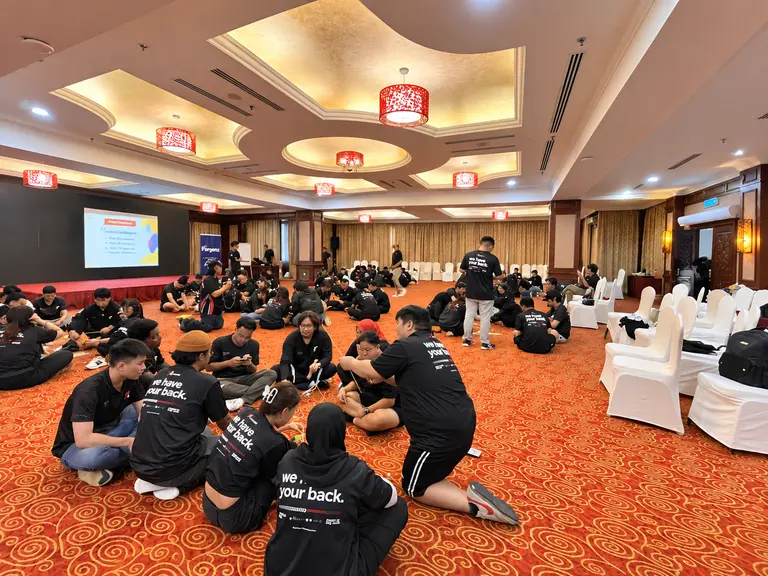
Team Building Activities Should Start With the Objective
It is easy to begin planning a programme by asking:
What games should we do?
A better question is:
What should be different after the programme?
If the objective is communication, the activity should create a situation where participants need to exchange information clearly.
If the objective is leadership, participants should face decisions, delegation, uncertainty or changing conditions.
If the objective is collaboration, the challenge should require people to depend on one another rather than simply compete.
If the objective is team alignment, structured discussion and reflection may sometimes be more useful than a highly physical challenge.
The activity is therefore a tool.
The learning objective comes first.
Organisations looking for a structured programme rather than standalone activity ideas can also explore Forgenz’s Corporate Team Building in Malaysia.
Quick Guide: Choosing a Team Building Activity
| Objective | Suitable Activity Examples |
|---|---|
| Communication | Blind Construction Challenge, Information Gap Challenge |
| Collaboration | Cross-Team Mission, Resource Allocation Challenge |
| Trust & Accountability | Shared Responsibility Challenge |
| Leadership | Rotating Leadership Challenge, Decision Under Pressure |
| Problem Solving | Progressive Problem Challenge, Process Improvement Challenge |
| Team Alignment | Team Working Agreement |
A well-designed programme may combine several activities, but more activities do not necessarily create a better learning experience.
Time should also be allocated for briefing, observation, discussion and debriefing.
1. Blind Construction Challenge
- Primary objective
- Communication, listening and clarity
- Suitable for
- Employees, supervisors and cross-functional teams
- Recommended group size
- Approximately 12–40 participants
- Typical duration
- 45–60 minutes
- Format
- Indoor
- Physical intensity
- Low
- Materials
- Blocks, paper cups, straws, cards or other simple lightweight building materials
How the Activity Works
Participants are divided into small teams.
Each team receives identical building materials.
One or more selected participants are allowed to see a reference structure, image or design. The remaining team members must recreate it.
The participants who can see the reference are not allowed to physically build the structure themselves.
Their role is to communicate what they see.
Depending on the intended learning outcome, the facilitator can introduce additional communication rules.
- only verbal instructions may be used
- only selected participants may ask questions
- information may need to pass through several people before reaching the builders
- participants may be restricted from pointing directly at materials
The challenge quickly creates situations where communication that seems obvious to one person becomes unclear to another.
Why This Activity Works
In normal workplace communication, the person giving an instruction often has more context than the person receiving it.
This creates a common problem:
The sender believes the instruction is clear because they already understand the situation. The receiver does not have the same reference point.
During the challenge, teams often discover that saying more does not necessarily mean communicating better.
They need to become more precise, confirm understanding and create a shared reference point.
What the Facilitator Should Observe
Useful behaviours to watch include:
- instructions that are too general
- participants assuming others understand
- lack of confirmation
- several people speaking at once
- unclear sequencing
- participants hesitating to ask questions
- leaders becoming overly directive
- information changing as it passes between people
- team members continuing despite obvious misunderstanding
These observations provide useful material for the debrief.
Common Challenge
A participant might say:
“Put that piece beside the other one.”
The instruction may make perfect sense to the person looking at the reference structure.
But the builder may not know:
- Which piece?
- Which side?
- How far away?
- What orientation?
Teams gradually learn that effective communication may require clear reference points, sequence, confirmation and shared language.
Debrief Questions
- What made communication difficult?
- When did the team begin making assumptions?
- How often did participants confirm what they understood?
- Did people feel comfortable asking questions?
- Was important information controlled by one person?
- What happened when instructions became unclear?
- Did the team change its communication approach?
- Where do similar communication issues happen at work?
Workplace Connection
The activity can be related to:
- supervisors giving work instructions
- handovers between shifts
- project teams working across departments
- technical employees communicating with non-technical colleagues
- work requests sent through email or messaging applications
- teams operating with incomplete information
The central learning point is simple:
Sending information is not the same as creating understanding.
Possible Variation
Introduce a change halfway through the challenge.
For example:
“The customer requirement has changed.”
The team must modify the existing structure rather than starting again.
This adds discussion around change, adaptability and communication under changing conditions.
2. Information Gap Challenge
- Primary objective
- Information sharing and communication
- Suitable for
- Employees, project teams and cross-functional teams
- Recommended group size
- Approximately 12–50 participants
- Typical duration
- 45–60 minutes
- Format
- Indoor
- Physical intensity
- Low
How the Activity Works
Participants are divided into small groups.
Each participant receives different information related to a shared problem.
No individual has enough information to solve the challenge independently.
For example:
- one participant knows the available resources
- another knows the timeline
- another holds customer requirements
- another knows restrictions that affect the solution
The group receives one common objective.
Participants must first identify what information exists, determine what is relevant and combine it before making a decision.
The facilitator may prevent participants from simply exchanging their instruction sheets.
This forces the group to communicate rather than merely pass documents around.
Why This Activity Works
Many workplace problems are not caused by a lack of information.
They are caused by information being located in different parts of the organisation.
One department knows something that another does not.
One person assumes everyone already knows what they know.
Another participant may possess critical information without recognising its importance.
The exercise makes these invisible information gaps easier to see.
What the Facilitator Should Observe
Pay attention to whether participants:
- immediately share their information
- wait until someone asks
- assume their information is unimportant
- dominate the discussion
- fail to ask what others know
- begin solving before gathering enough information
- listen to conflicting information
- confirm the final decision against all available information
Common Challenge
Teams often begin solving too early.
Instead of first asking:
“What information does everyone have?”
they jump directly to:
“What should we do?”
This can result in a solution based mainly on the information held by the loudest or most influential participant.
Debrief Questions
- Did the team understand what information was available?
- Was every participant heard?
- When did missing information become visible?
- Did anyone hold information that later became important?
- Did the team start solving the problem too early?
- How did the group manage conflicting information?
- Where do information silos occur in the workplace?
Workplace Connection
This exercise can be relevant to:
- cross-functional projects
- operations and procurement
- sales and operations coordination
- management decision-making
- customer service escalation
- project handovers
- work involving multiple departments
The workplace lesson is that collaboration often begins with making information visible.
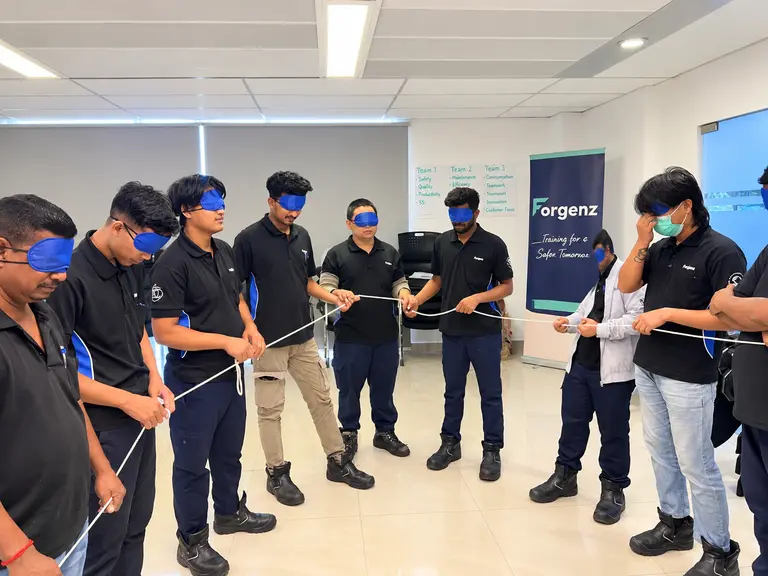
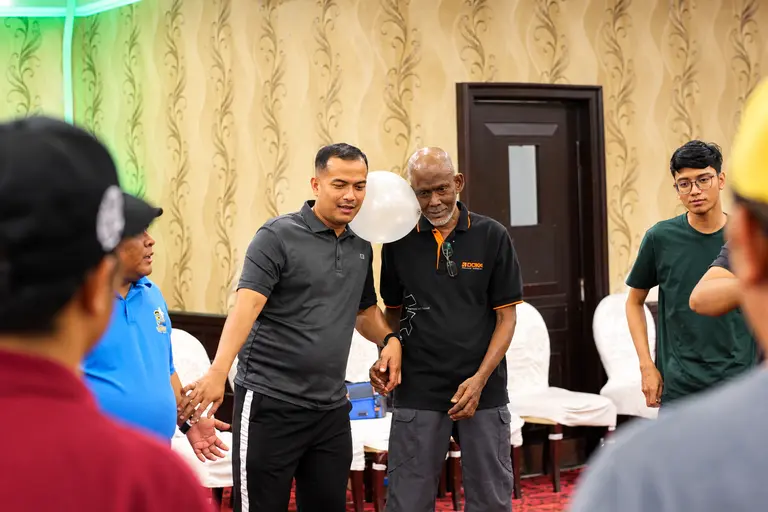
3. Cross-Team Mission
- Primary objective
- Collaboration across teams
- Suitable for
- Medium to large corporate groups
- Recommended group size
- Approximately 20–80 participants
- Typical duration
- 60–90 minutes
- Format
- Indoor or outdoor
- Physical intensity
- Low to moderate, depending on design
How the Activity Works
Participants are divided into several teams.
Each team receives what initially appears to be an independent mission.
At first, groups may believe they are competing against one another.
As the activity develops, they discover that no single team can achieve the final objective alone.
For example:
- one team may hold materials another team needs
- another may possess information required elsewhere
- another may produce a component that must connect with the work of other groups
The overall outcome therefore depends on cooperation across teams.
Why This Activity Works
Organisations often divide employees into departments because specialisation improves efficiency.
However, departmental structures can unintentionally create silos.
Teams may begin optimising their own performance instead of considering the larger organisational outcome.
The Cross-Team Mission makes this behaviour visible.
Participants may spend part of the activity protecting resources or competing before realising that the final objective requires collaboration.
What the Facilitator Should Observe
Look for:
- teams protecting information or resources
- competition continuing after collaboration becomes necessary
- assumptions about other groups
- reluctance to ask for assistance
- informal leaders emerging across teams
- teams identifying the overall objective early
- communication channels being created between groups
- duplication of effort
Common Challenge
One useful question is whether participants ever ask:
“What are the other teams doing?”
Some groups remain focused entirely on their own assigned task.
Others quickly investigate how their work connects with everyone else.
That difference can create a useful discussion about organisational silos.
Debrief Questions
- When did the teams realise they needed one another?
- Why did competition occur?
- What information was not shared?
- Did teams optimise their own result or the overall result?
- What made cross-team communication difficult?
- Who took responsibility for coordinating between teams?
- Where does the same pattern appear in the organisation?
Workplace Connection
The activity can relate to:
- department silos
- operations versus sales
- procurement versus users
- head office versus branches
- production versus quality
- project teams
- shared organisational objectives
The central learning point is:
A team can perform well individually while the organisation performs poorly collectively.
4. Resource Allocation Challenge
- Primary objective
- Collaboration, negotiation and prioritisation
- Suitable for
- Employees, supervisors and managers
- Recommended group size
- Approximately 15–50 participants
- Typical duration
- 45–75 minutes
- Format
- Indoor
- Physical intensity
- Low
How the Activity Works
Several teams receive different resources.
The distribution is intentionally uneven.
Some groups may have more materials than they require.
Others may have the right materials but insufficient information.
Another group may possess something that appears unimportant at first but becomes valuable later.
Teams must complete an assigned task within a limited timeframe.
They are allowed to communicate, exchange resources or negotiate with other teams.
The facilitator does not immediately tell participants that cooperation is expected.
The behaviour that emerges becomes part of the learning experience.
Why This Activity Works
When resources are limited, people may become protective.
Teams may focus on keeping what they have rather than asking whether the organisation as a whole is using resources effectively.
The activity can simulate issues such as:
- budget constraints
- limited manpower
- access to equipment
- shared organisational resources
- competing departmental priorities
What the Facilitator Should Observe
Useful observations include:
- whether teams hoard resources
- whether they ask what other teams need
- aggressive or collaborative negotiation
- failure to recognise surplus resources
- teams exchanging information as well as materials
- decisions based on fairness versus organisational outcome
- participants identifying opportunities for mutual benefit
Debrief Questions
- What influenced your decisions about sharing resources?
- Did your team have anything another team needed?
- What prevented cooperation?
- Was the goal to win individually or succeed collectively?
- How were priorities decided?
- What happened when resources became scarce?
- Where do similar negotiations happen at work?
Workplace Connection
This activity can support discussion around:
- resource allocation
- departmental budgets
- manpower planning
- shared equipment
- cross-functional priorities
- negotiation
- organisational versus departmental interests
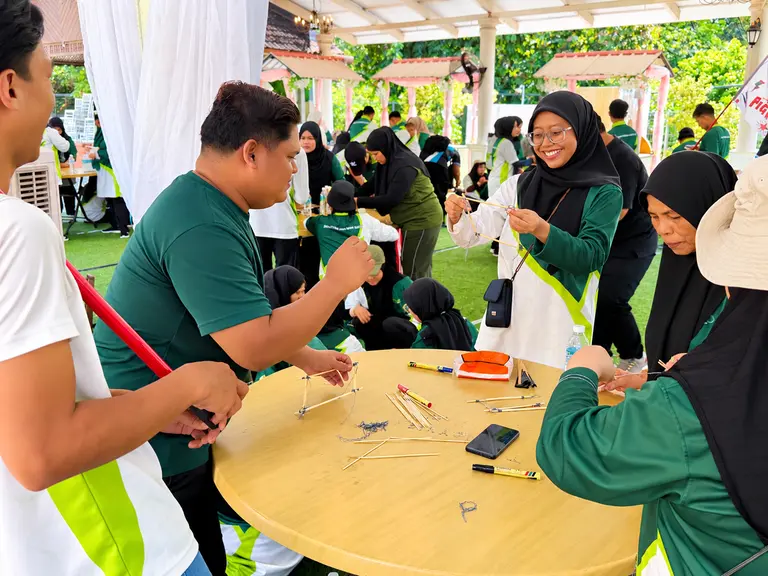
6. Rotating Leadership Challenge
- Primary objective
- Leadership, delegation and adaptability
- Suitable for
- Supervisors, team leaders, managers and emerging leaders
- Recommended group size
- Approximately 12–36 participants
- Typical duration
- 60–75 minutes
- Format
- Indoor or outdoor
- Physical intensity
- Low to moderate
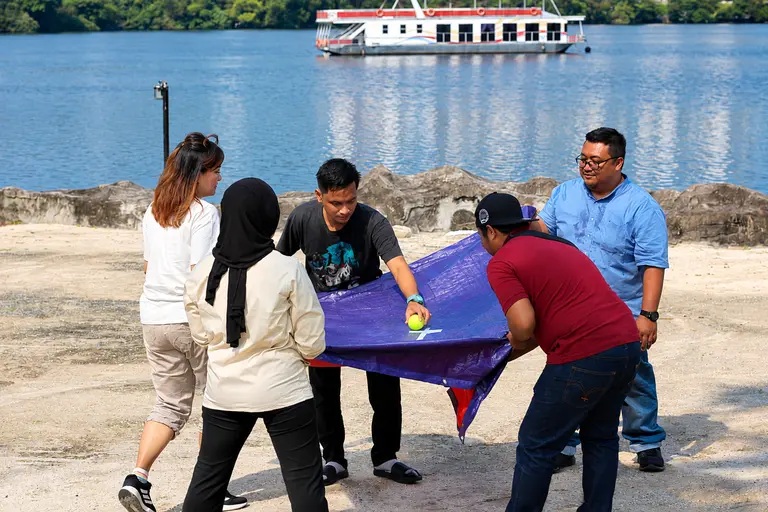
How the Activity Works
Teams are given a challenge that requires planning and coordination.
Leadership responsibility changes at predetermined points.
For example:
- one participant leads the planning stage
- another takes over during execution
- another becomes responsible when conditions change
The outgoing leader is not allowed to continue controlling the team after the transition.
The next leader must understand the current situation and continue from where the team stands.
Why This Activity Works
Workplace leadership often changes according to the situation.
A project may move from planning to implementation.
A supervisor may hand responsibility to another shift.
A technical specialist may temporarily need to lead a decision.
The exercise highlights that leadership is not only about having authority.
It also requires understanding context, communicating direction and enabling others to contribute.
What the Facilitator Should Observe
Look for:
- different leadership styles
- how quickly new leaders understand the situation
- whether outgoing leaders let go
- delegation patterns
- leader communication
- participation from quieter team members
- decisions made without consultation
- teams adapting to different leadership approaches
Common Challenge
Some outgoing leaders continue giving instructions after their leadership period ends.
Others provide almost no handover.
New leaders may immediately change everything instead of first understanding what has already been decided.
These behaviours can create valuable discussion about leadership transitions.
Debrief Questions
- What changed when leadership changed?
- Which leadership behaviours helped the team?
- Was responsibility delegated clearly?
- How effective were the handovers?
- Did leaders listen before making decisions?
- How did the team respond to different leadership styles?
- What happens during leadership transitions at work?
Workplace Connection
Relevant applications include:
- supervisor development
- succession
- project leadership
- shift handovers
- emerging leaders
- leadership flexibility
- delegation
7. Decision Under Pressure
- Primary objective
- Decision-making and leadership
- Suitable for
- Supervisors, managers and professional teams
- Recommended group size
- Approximately 12–30 participants
- Typical duration
- 45–60 minutes
- Format
- Indoor
- Physical intensity
- Low
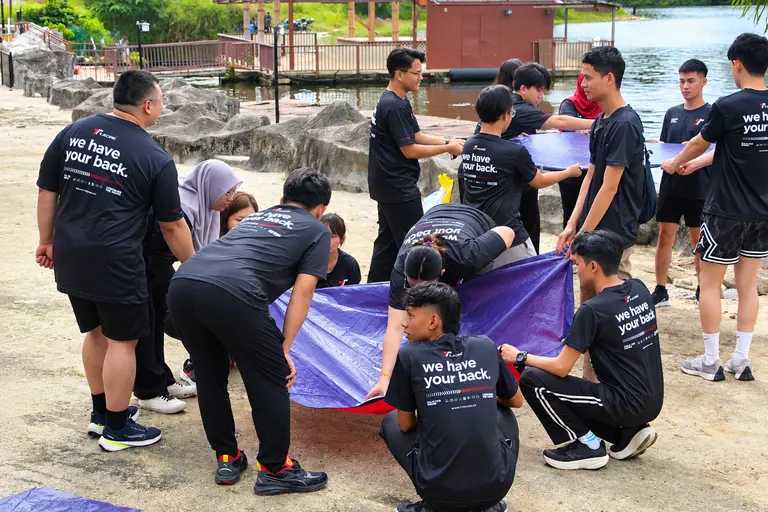
How the Activity Works
Teams receive a workplace-style scenario containing:
- several possible priorities
- incomplete information
- limited time
- competing stakeholder needs
- a decision that must be made
During the exercise, the facilitator introduces new information.
Participants must decide whether to maintain or change their original decision.
The activity is not designed to identify one universally correct answer.
The focus is on how the team makes decisions.
Why This Activity Works
Managers rarely make decisions with perfect information.
They often need to balance:
- urgency
- risk
- people
- resources
- customer expectations
- operational consequences
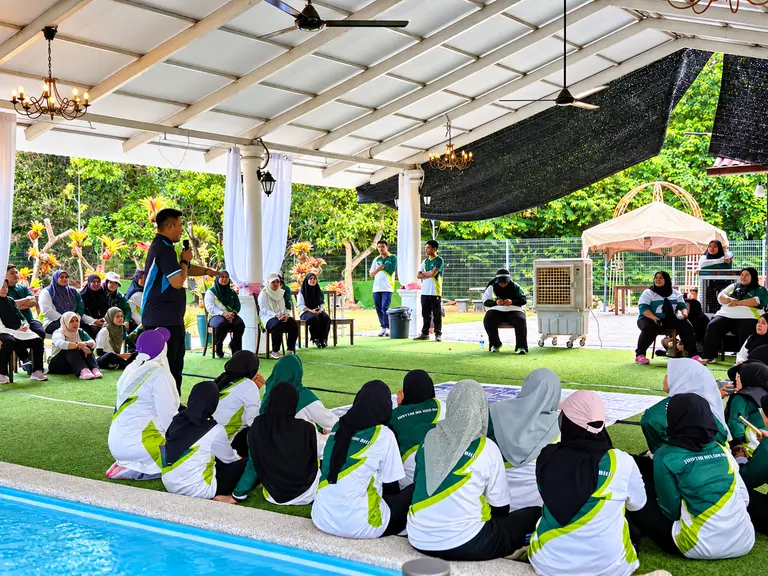
The activity creates a controlled environment where participants can observe how their team makes decisions under pressure.
What the Facilitator Should Observe
Pay attention to:
- who speaks first
- whether assumptions are challenged
- whether quieter participants contribute
- speed versus quality of decision-making
- evidence used
- willingness to change direction
- conflict during disagreement
- responsibility for the final decision
Debrief Questions
- What information influenced your decision most?
- What assumptions did the team make?
- Did everyone have an opportunity to contribute?
- How did time pressure affect the discussion?
- What happened when new information appeared?
- Was changing the decision seen as weakness or adaptability?
- How does your workplace team make difficult decisions?
Workplace Connection
This activity can support discussion around:
- supervisory decisions
- operational incidents
- project management
- customer escalation
- management meetings
- leadership judgement
- uncertainty
8. Progressive Problem Challenge
- Primary objective
- Problem solving, adaptability and teamwork
- Suitable for
- Most corporate teams
- Recommended group size
- Approximately 12–50 participants
- Typical duration
- 45–75 minutes
- Format
- Indoor or outdoor
- Physical intensity
- Low to moderate
How the Activity Works
Teams begin with a clear challenge and a defined set of rules.
They develop a plan and begin working.
Partway through, the facilitator introduces a change.
Examples may include:
- a resource becoming unavailable
- a deadline changing
- an additional requirement being introduced
- one method no longer being allowed
- a customer expectation changing
The team must adapt rather than restart from the beginning.
Why This Activity Works
Many workplace plans fail not because the original plan was poor, but because conditions changed.
Teams may respond to change by:
- blaming
- resisting
- rushing
- starting over unnecessarily
- adapting intelligently
The exercise allows these reactions to become visible.
What the Facilitator Should Observe
Look for:
- attachment to the original plan
- frustration when rules change
- rapid improvisation without analysis
- teams pausing to reassess
- people proposing alternatives
- communication during change
- leaders involving or excluding others
- willingness to abandon an ineffective approach
Debrief Questions
- How did the team respond when conditions changed?
- What was your first reaction?
- Did the team review the plan or immediately react?
- What helped adaptation?
- Did anyone continue following the old plan?
- How did communication change under pressure?
- Where does similar change occur in your workplace?
Workplace Connection
Relevant workplace themes include:
- changing customer requirements
- operational disruptions
- project changes
- new priorities
- resource constraints
- organisational change
- adaptability
9. Process Improvement Challenge
- Primary objective
- Continuous improvement, teamwork and efficiency
- Suitable for
- Operations, administrative teams, supervisors and managers
- Recommended group size
- Approximately 12–40 participants
- Typical duration
- 60–90 minutes
- Format
- Indoor
- Physical intensity
- Low
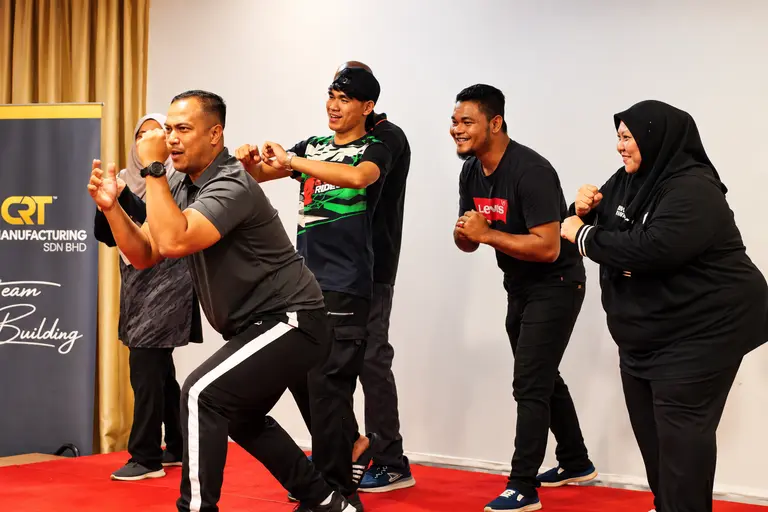
How the Activity Works
Participants complete a simple repeatable process.
For example, the team may need to:
- move information through several stages
- assemble a simple item
- complete a sequence of tasks
- process a simulated customer request
The first round establishes a baseline.
Participants then review what happened.
They identify:
- delays
- unnecessary steps
- unclear responsibilities
- communication problems
- waiting
- duplication
The team modifies the process and repeats the challenge.
Several rounds may be conducted.
Why This Activity Works
Improvement becomes easier to understand when participants can experience the difference between working harder and improving the process.
During the first round, teams often try to increase speed without changing the underlying workflow.
Eventually, they may realise that redesigning the process can create a larger improvement.
What the Facilitator Should Observe
Watch for:
- duplicated work
- unnecessary movement
- unclear roles
- waiting
- communication bottlenecks
- excessive checking
- handover problems
- participants solving symptoms instead of causes
Debrief Questions
- What created the biggest delay?
- Did the team initially try to work faster or change the process?
- Which improvement produced the biggest difference?
- How were ideas selected?
- Did participants measure improvement?
- What problems remained?
- Where could the same improvement thinking be applied at work?
Workplace Connection
This activity can connect with:
- continuous improvement
- operational efficiency
- administrative workflows
- customer service processes
- production environments
- teamwork
- problem solving
10. Team Working Agreement
- Primary objective
- Team alignment and working relationships
- Suitable for
- New teams, established teams and management groups
- Recommended group size
- Approximately 6–30 participants
- Typical duration
- 60–90 minutes
- Format
- Indoor
- Physical intensity
- None
How the Activity Works
This is less of a game and more of a facilitated team exercise.
Participants reflect individually before discussing questions such as:
- How should we communicate?
- How quickly should we respond to one another?
- How should disagreement be handled?
- What does good teamwork look like here?
- How should decisions be made?
- What should happen when someone cannot meet a commitment?
- What behaviours make collaboration difficult?
The facilitator helps the team turn broad statements into practical behaviours.
Instead of:
“We should communicate better.”
the group might agree:
“If a deadline is at risk, we communicate it early rather than waiting until the due date.”
The final output becomes a simple set of team working agreements.
Why This Activity Works
Teams often have expectations that have never been discussed.
One person expects immediate responses.
Another believes messages can wait until the next day.
One manager expects employees to challenge ideas.
Another participant believes disagreement is disrespectful.
These differences remain invisible until they create tension.
The Team Working Agreement creates a structured conversation around those expectations.
What the Facilitator Should Observe
Useful areas include:
- disagreement about expectations
- vague statements
- unrealistic commitments
- issues participants avoid discussing
- differences between managers and employees
- assumptions about communication
- accountability
Debrief Questions
- Which expectations were already shared?
- Which expectations were different?
- What surprised the team?
- Which agreements will be hardest to maintain?
- How will the team know whether the agreement is working?
- What should happen when the agreement is not followed?
Workplace Connection
This exercise can be particularly useful for:
- new teams
- teams after restructuring
- project teams
- management teams
- teams experiencing communication issues
- cross-functional groups
Unlike many experiential activities, the final output can become something the team continues using after the programme.
Indoor vs Outdoor Team Building Activities
Neither format is automatically better.
The right choice depends on the objective, participant profile and practical environment.
Indoor Team Building Activities
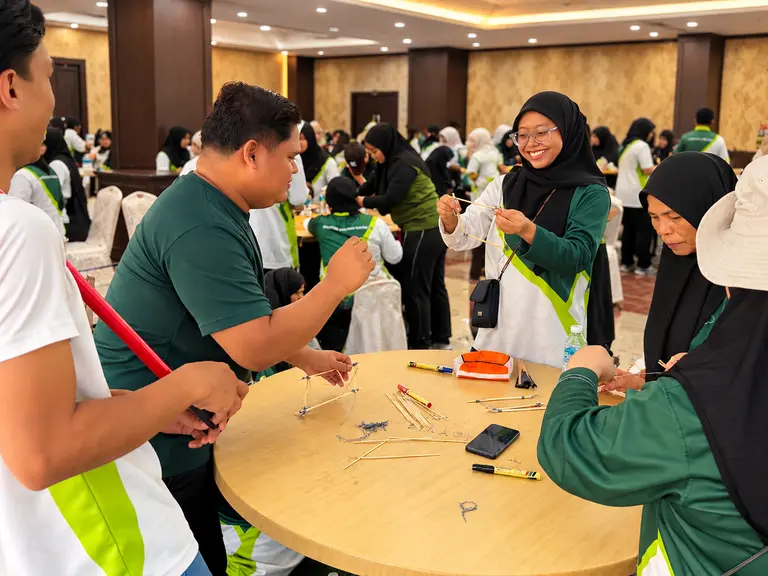
Indoor activities are particularly suitable for:
- communication exercises
- leadership scenarios
- problem solving
- decision-making
- team alignment
- structured discussion
- activities requiring detailed facilitation
Indoor formats may also be preferable where weather, accessibility or venue restrictions are important considerations.
Outdoor Team Building Activities
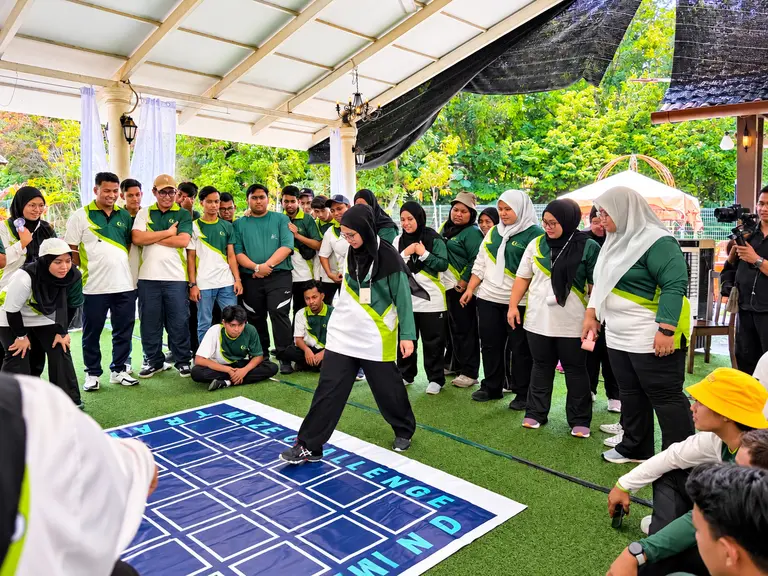
Outdoor programmes can provide:
- greater movement
- larger activity spaces
- physical team challenges
- stronger experiential elements
- opportunities for larger groups
Outdoor does not automatically mean physically demanding.
Activities can still be designed around different participant profiles and physical abilities.
Combining Indoor and Outdoor Formats
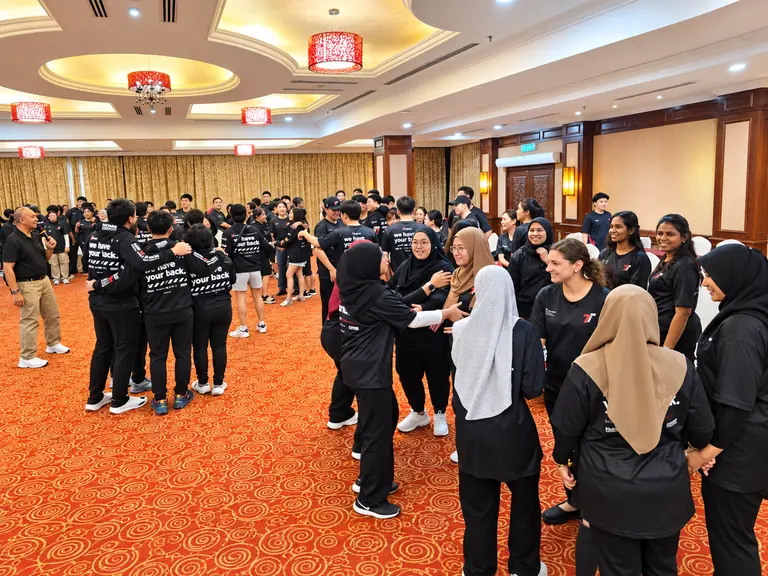
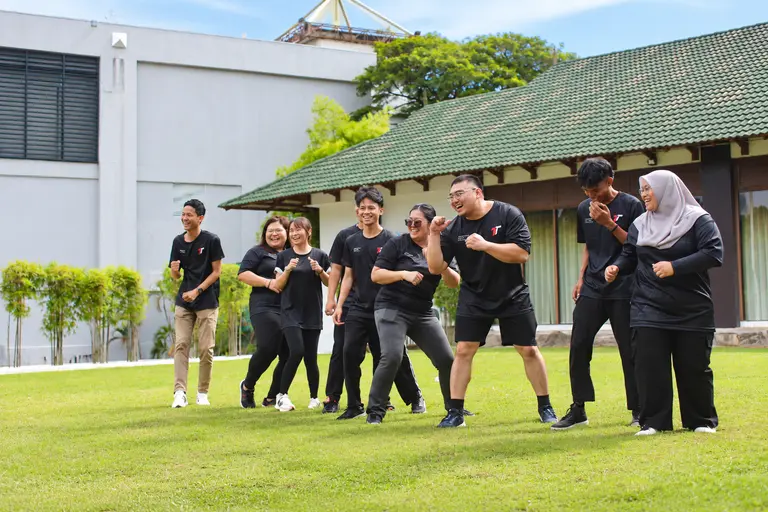
A programme may use an indoor session for briefing before moving outdoors for experiential challenges.
Participants can then return to a structured debrief and workplace discussion.
The format should support the programme objective rather than determine it.
How Many Activities Should a Team Building Programme Include?
There is no ideal number.
A programme containing ten activities is not automatically better than one containing four.
Too many activities can create a schedule where participants move continuously from one challenge to another without having enough time to reflect.
For example, a programme might include:
- Opening and team briefing
- Communication activity
- Collaborative challenge
- Leadership or problem-solving exercise
- Final team mission
- Facilitated debrief and workplace application
The exact design depends on:
- available duration
- group size
- participant profile
- programme objective
- venue
- activity complexity
- facilitation requirements
Quality of learning is more important than quantity of games.
Why Debriefing Matters in Team Building
Two teams can complete the same activity and learn completely different things.
One may struggle because nobody listens.
Another may struggle because one person controls every decision.
Another may perform well because responsibilities are clear.
Without debriefing, these behaviours may simply disappear once the activity ends.
A facilitated debrief helps participants examine what actually happened.
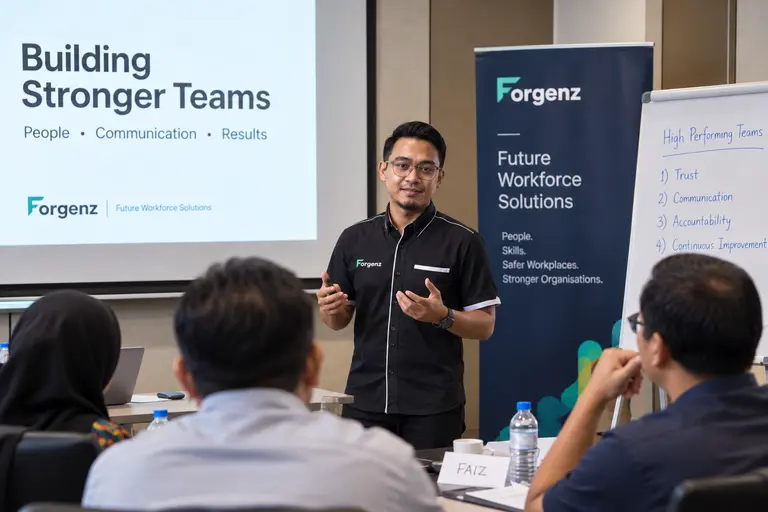
Useful questions include:
- What happened?
- What worked?
- What did not work?
- What behaviour helped the team?
- What made the task difficult?
- How did the team make decisions?
- How was information shared?
- What happened when the team disagreed?
- Where do similar behaviours appear at work?
- What should the team do differently?
This is one of the main differences between simply participating in an activity and using an activity as a team-development experience.
How to Choose the Right Team Building Activities for Employees
1. Objective
What does the organisation want to strengthen?
- Communication?
- Collaboration?
- Leadership?
- Trust?
- Problem solving?
- Alignment?
The answer should influence the activity design.
2. Participant Profile
Consider:
- job levels
- age range
- physical ability
- language
- management versus employee mix
- whether participants already work together
A programme suitable for senior managers may not suit a large operational workforce.
3. Group Size
An activity that works well for 15 people may become difficult with 150.
Larger programmes may require:
- multiple facilitators
- rotating stations
- parallel activities
- different briefing methods
- different approaches to debriefing
4. Environment
Consider:
- indoor or outdoor space
- weather
- accessibility
- movement
- equipment
- venue restrictions
- travel time
5. Workplace Relevance
Ask:
What will participants be able to connect back to work?
A creative activity can be enjoyable.
But the strongest corporate team building programmes usually help participants recognise something about how they communicate, lead, collaborate or solve problems together.
Team Building Activities vs Team Bonding Activities
The terms are often used interchangeably.
However, there can be a useful distinction.
Team bonding commonly focuses on social interaction, relationships and shared experiences.
Examples may include:
- recreational activities
- meals
- celebrations
- informal group experiences
Team building can include bonding, but may also involve more structured objectives such as:
- communication
- collaboration
- leadership
- problem solving
- role clarity
- team alignment
Neither is automatically better.
The appropriate choice depends on what the organisation wants to achieve.
A company may simply want employees to spend enjoyable time together.
Another may want a facilitated programme focused on workplace team behaviour.
Some programmes combine both.
Common Mistakes When Choosing Team Building Activities
Choosing Activities Before Defining the Objective
This can create a programme that is enjoyable but disconnected from what the organisation actually needs.
Making Everything Competitive
Competition can create energy and urgency.
However, excessive competition can work against a programme intended to strengthen collaboration.
Assuming Physical Difficulty Creates Better Teamwork
More demanding does not automatically mean more useful.
The activity should suit the participant profile and objective.
Ignoring Accessibility
Not every participant has the same physical ability, confidence or mobility.
Alternative roles or activity options should be considered where appropriate.
Packing Too Many Activities Into the Schedule
Participants need time to understand instructions, participate properly and reflect.
Skipping the Debrief
Without reflection, an activity may remain only an activity.
Safety and Accessibility Considerations
Corporate team building should be planned around the actual participant group and environment.
Considerations may include:
- participant mobility
- known physical limitations
- weather
- hydration
- activity surface
- venue restrictions
- equipment condition
- appropriate briefing
- emergency arrangements
- participant comfort
Activities should not require employees to participate in unnecessarily risky or humiliating situations.
Where physical challenges are included, programme design should account for the actual participant profile and activity environment.
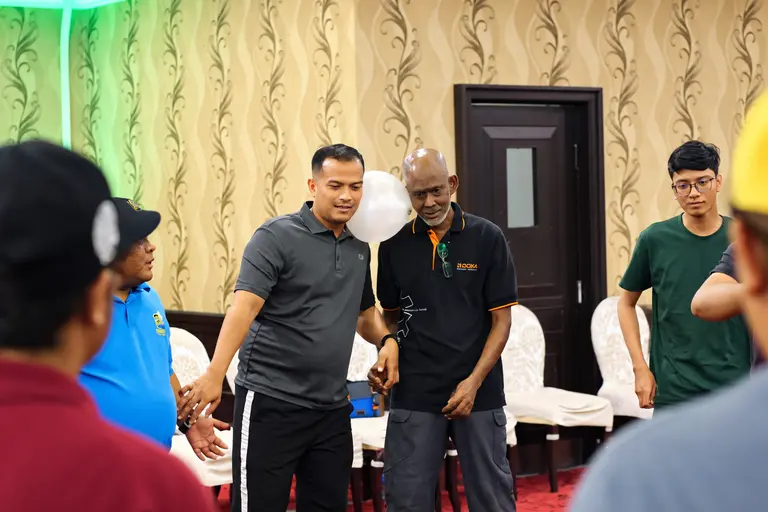
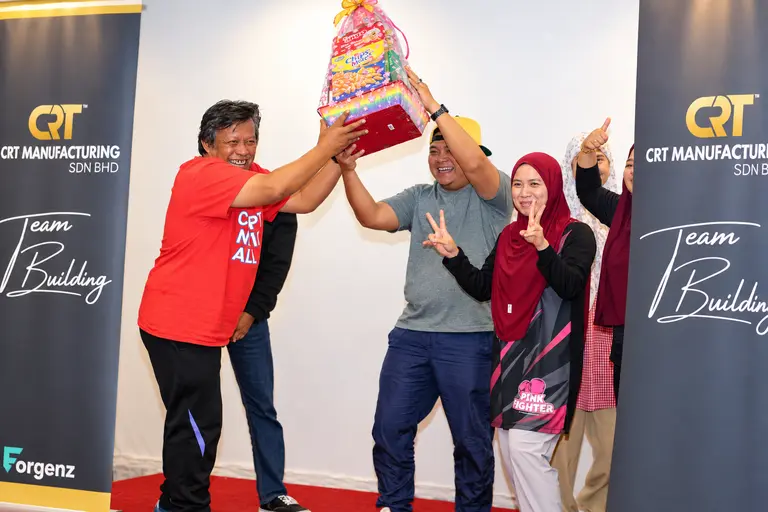
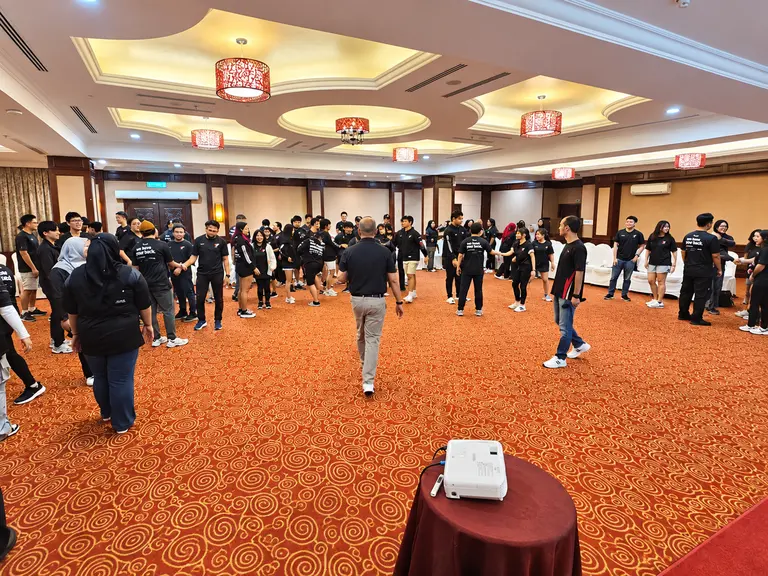
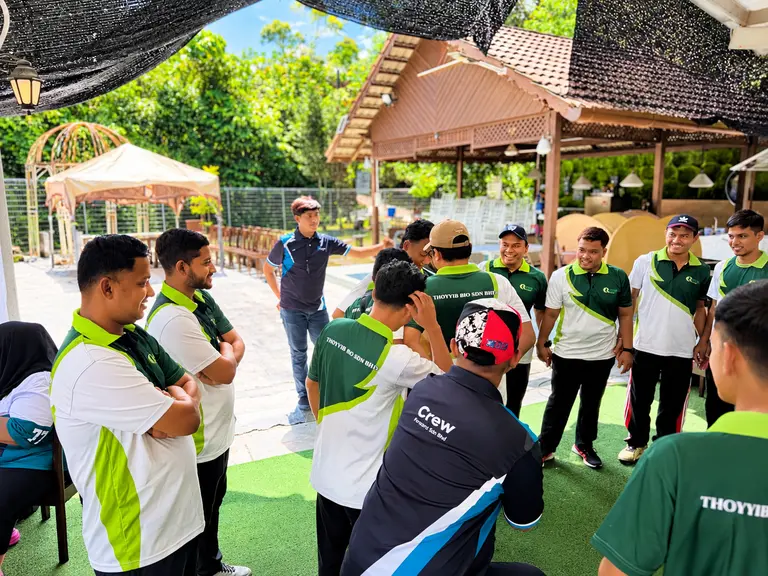
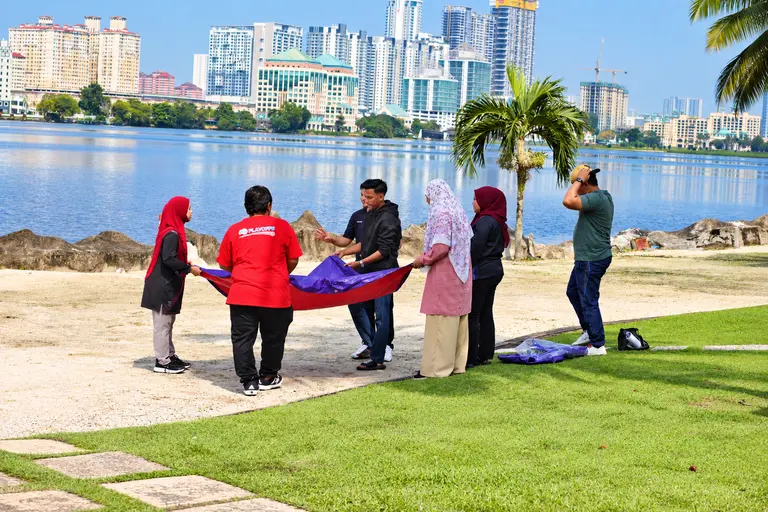
Team Building in Action
A look at real Forgenz team building sessions across different programme formats and participant groups.
Frequently Asked Questions
What are good team building activities for employees?
Good activities are those that support the intended team objective. For communication, an information-gap exercise may be appropriate. For leadership, a rotating leadership challenge may be more useful. For alignment, a facilitated Team Working Agreement may provide greater value than a physical activity.
What team building activities are suitable for corporate groups?
Corporate groups can use communication challenges, collaborative problem-solving exercises, leadership simulations, process-improvement activities and facilitated team-alignment sessions. The appropriate choice depends on participant profile, group size, environment and objectives.
Are team building activities suitable for large groups?
Yes, but the design needs to account for scale. Larger groups may require several facilitators, parallel activity stations or different methods for briefing and debriefing.
Should corporate team building be competitive?
It can be. Competition can create energy and urgency, but it should not dominate a programme where the intended objective is collaboration or alignment.
Are outdoor team building activities better than indoor activities?
No. Both formats can be effective. Indoor activities can support communication, leadership and structured problem solving, while outdoor environments may provide more space for experiential challenges. The choice should depend on the objective, participants and environment.
What is the difference between team building and team bonding?
Team bonding tends to focus more on relationships and social connection. Team building may include bonding but can also involve structured objectives such as communication, collaboration, leadership or problem solving.
How long should a team building programme be?
There is no single ideal duration. A programme may range from a focused session to a full-day or multi-day experience depending on objectives, participant numbers and activity design.
Can team building activities be customised for a company?
Yes. Activities and programme structure can be adapted around participant profile, group size, venue, available duration and organisational objectives.
Structured team development
Looking for More Than Standalone Team Building Activities?
Searching for activity ideas is a useful starting point.
But when an organisation wants to strengthen communication, collaboration, leadership, trust, problem solving or team alignment, the overall programme design becomes just as important as the individual activities.
Forgenz designs purpose-built corporate team building programmes around the organisation, participant group and intended outcomes.
Our programme-design approach considers:
Objective → Participant Profile → Environment → Activity Design → Facilitation → Debrief
Explore Corporate Team Building in Malaysia
Looking for a structured programme for your organisation?
EXPLORE CORPORATE TEAM BUILDINGPlanning a Programme for Your Organisation?
Tell us:
- what you want the team to strengthen
- approximate number of participants
- preferred location
- available duration
- indoor or outdoor preference, if any
We can discuss a suitable programme direction.