
Employees
Strengthen everyday communication, cooperation and shared responsibility across the team.
Corporate Team Building Malaysia
Purpose-built corporate team building programmes in Malaysia designed around what your team needs to strengthen — from communication and collaboration to leadership, trust, problem solving and team alignment. Rather than starting with a fixed list of activities, we begin with the team, the workplace context and what the organisation wants the experience to achieve.
Built for the team
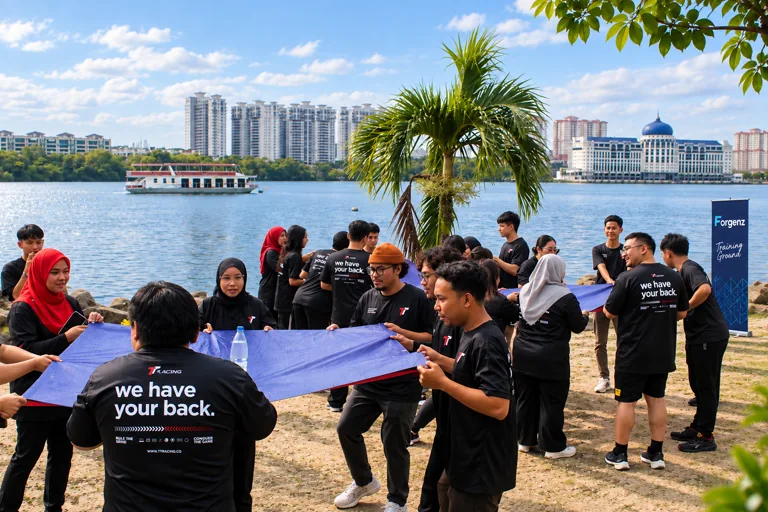
A familiar activity does not automatically make a programme suitable for every team. A meaningful experience should reflect the organisation’s priorities, the people taking part and the situations they face at work.
Forgenz plans corporate team building around the outcome first. This creates a stronger connection between the activity, the facilitated discussion and the way participants work together after the programme.
Start with the outcome
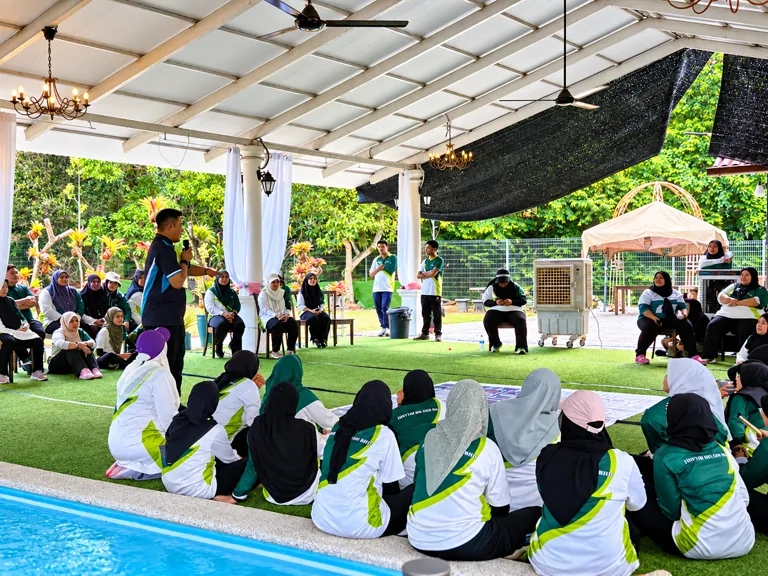
The activity becomes useful when it supports a clear team-development purpose.
How people exchange information, listen, clarify and coordinate under pressure.
How different roles contribute, share responsibility and solve problems together.
Reliability, communication and the confidence to work through challenges openly.
Decision-making, delegation, accountability and constructive group influence.
Planning, adaptation and collective thinking when the path is not obvious.
Shared priorities, clearer expectations and stronger cooperation across the team.
Who it supports
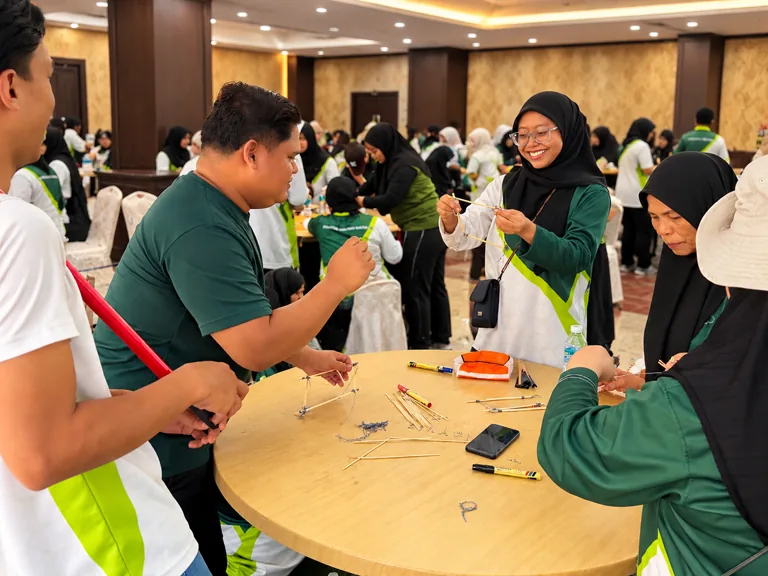
The emphasis can change according to the responsibilities, relationships and experience of the participants.
Strengthen everyday communication, cooperation and shared responsibility across the team.
Practise clearer direction, delegation, coordination and constructive leadership within a group.
Explore alignment, decision-making and the behaviours that support stronger team performance.
Help people from different functions understand one another’s roles and work towards shared priorities.
Programme formats
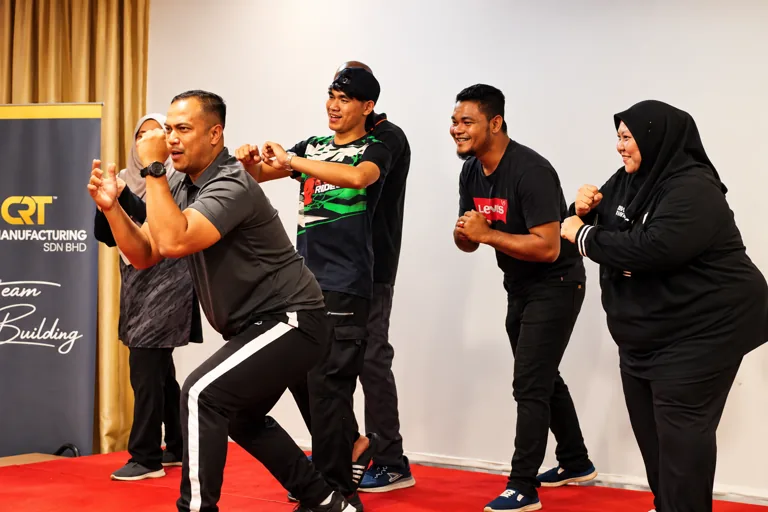
The right format depends on the objective, participants, available time and programme environment.
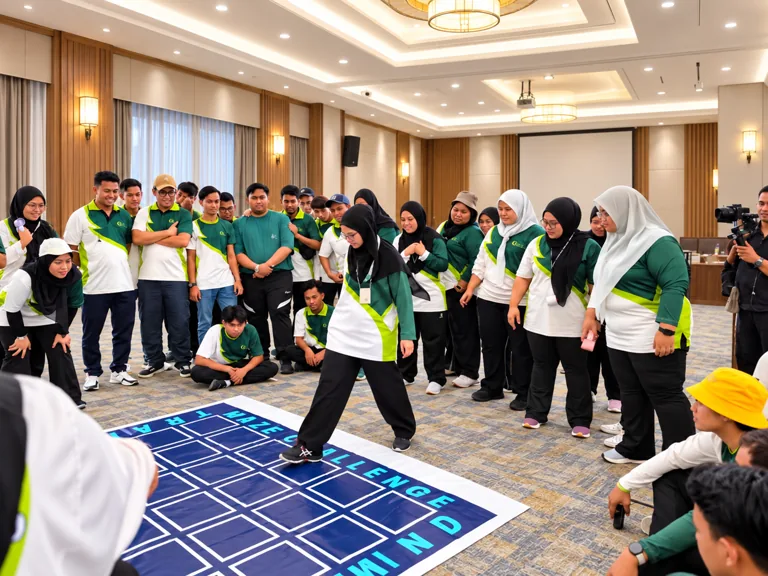
Focused experiences for meeting rooms, training spaces and controlled environments. Suitable when time, weather or mobility needs call for a compact format.
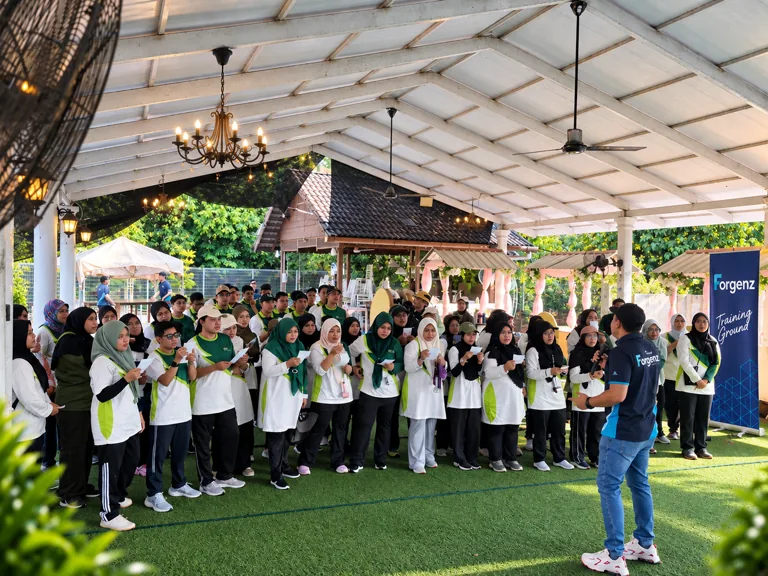
Active experiences that introduce movement, coordination and shared problem-solving in an appropriate outdoor setting.
A broader experience combining structured team development with reflection, alignment and meaningful time away from daily routines.
Activities designed to surface decision-making, delegation, communication and leadership behaviour for facilitated reflection.
A programme shaped around your objective, participants, venue, duration and team needs.
Purpose before activity
Activities are the method—not the end result. A well-planned sequence turns participation into a useful team-learning experience.
Set the purpose, expectations and ground rules for the experience.
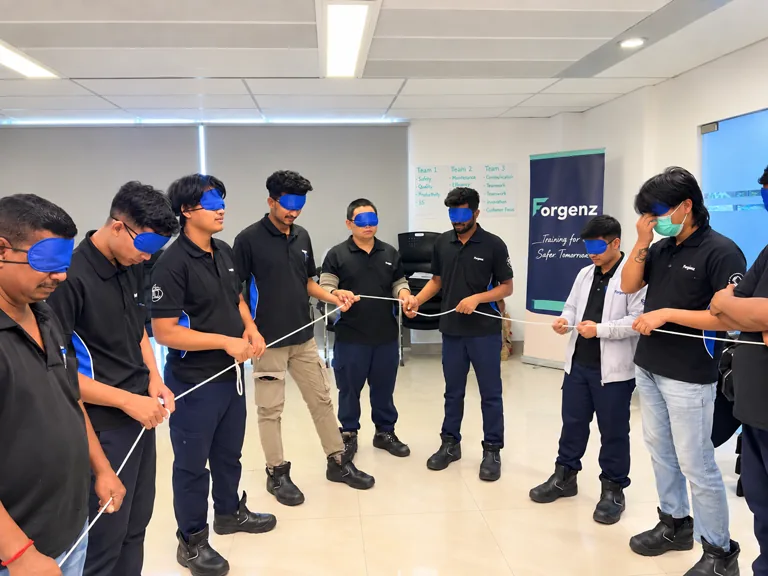
Engage participants in a structured challenge linked to the objective.
Notice how the team communicates, decides and responds together.
Guide participation and help the group examine useful moments.
Discuss what happened and what the team can learn from it.
Relate the learning to real responsibilities, relationships and situations at work.
Looking for practical ideas? Explore our guide to team building activities for corporate teams
Programme design
The programme is shaped through a clear planning process before the team takes part.
Clarify what the organisation wants the team to strengthen.
Understand team size, roles, accessibility and existing dynamics.
Consider venue, duration, safety and operational constraints.
Select experiences that create the right learning moments.
Guide participation, observation and constructive reflection.
Connect the experience with useful workplace learning and next steps.
Selecting a provider
A good provider should be able to explain how the experience will support the team—not only which activities will be included.
A clear explanation of how the experience supports the organisation’s objectives.
Activities and facilitation selected for the team—not copied from a standard event agenda.
Facilitators who can manage participation, observe the group and guide a useful debrief.
Appropriate consideration of physical ability, accessibility, safety and comfort.
Learning that participants can relate to communication, leadership and cooperation at work.
A proposal that explains the format, timing, venue needs and programme arrangements.
Programme scope
Forgenz does not begin with a fixed package name. The proposal is prepared around the experience the organisation needs and the practical arrangements required to deliver it well.
The final scope may take the following factors into account:
Venue considerations
The venue should support the programme rather than limit it. A convenient location is useful, but the available spaces and facilities also affect what can be delivered.
Learning connection
The experience creates useful moments for observation. Facilitation and debriefing help participants understand what those moments may mean for the team.
Observe how the team communicates, shares information, makes decisions and responds when plans change.
Give participants space to compare perspectives, recognise useful behaviours and examine what made the task difficult.
Relate the discussion to real responsibilities, team relationships and situations participants may face in the workplace.
Making the choice
The right programme starts with a few practical questions rather than a long list of games.
Identify the behaviour, relationship or team challenge the programme should address.
Consider roles, seniority, team structure, physical needs and how well participants know one another.
Balance the objective with the available time, venue, budget and operational schedule.
Decide what participants should recognise, discuss or do differently after the experience.
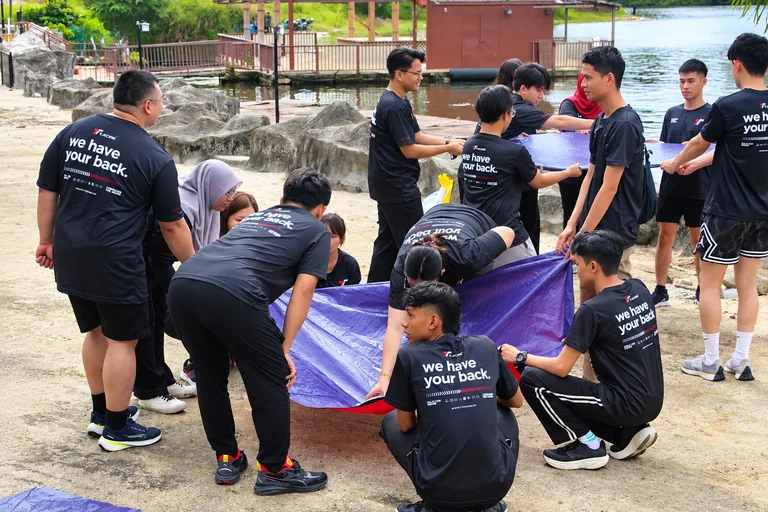
Team experiences in action
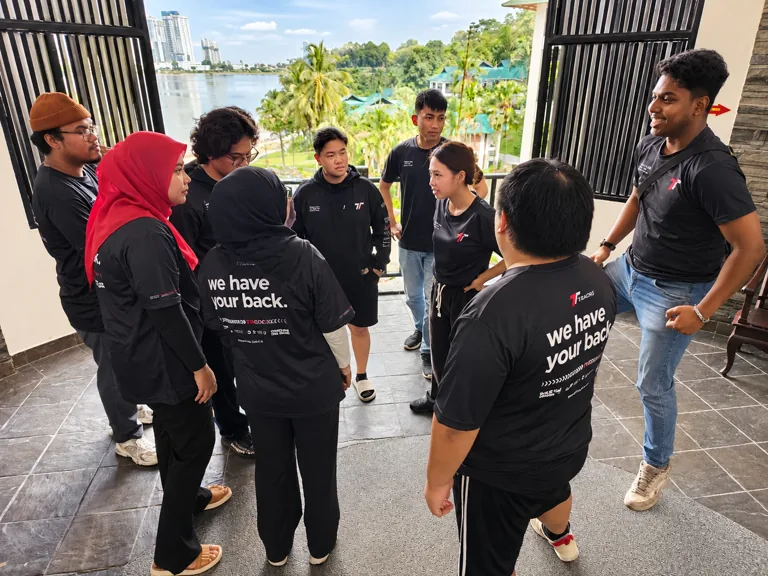
A team programme should give participants space to take part, observe one another, communicate and reflect together.
The exact experience will vary according to the team and programme scope. Genuine participation matters more than making an activity look impressive.
Understanding the options
These terms are often used together, but they can serve different purposes.
A structured programme with a defined development objective, guided activities, facilitation and reflection.
Individual challenges or experiences used within a wider programme to create interaction and learning moments.
Time together that helps colleagues connect, build familiarity and strengthen relationships, usually with a lighter learning structure.
Extended format
A company retreat can create more time for team development, leadership discussion, planning and informal connection away from daily work routines.
Where suitable, Forgenz can help structure a retreat agenda that combines purposeful team experiences with reflection or corporate sessions. The format should remain focused enough to achieve the organisation’s intended outcome.
Planning a different corporate occasion?
For annual dinners, product or corporate launches, town halls, family days, company celebrations and other corporate gatherings, explore Forgenz Corporate Events.
Eligible employers can apply to use their HRD Corp levy for applicable programmes, subject to HRD Corp requirements.
FAQ
Corporate team building is a structured experience designed to strengthen how employees communicate, collaborate, solve problems, lead and work towards shared goals.
Team bonding mainly helps people connect and enjoy time together. Team building has a clearer development objective and usually includes facilitated activities, observation and reflection.
Yes. The programme can be shaped for employees, supervisors, managers, leadership teams or a mixed group. The objective and activities should match the people taking part.
Yes. Communication and collaboration can be central outcomes, with activities selected to surface listening, coordination, shared responsibility and problem solving.
Yes. Activities can be selected or adapted around the objective, participant profile, venue, duration and practical requirements.
The final scope is shaped around the organisation’s needs. Common formats are available, but the proposal will reflect the selected objective and programme arrangements.
Yes. Indoor, outdoor and mixed formats can be considered. The best option depends on the objective, venue, weather, participant needs and desired level of physical activity.
The suitable structure depends on group size, venue, duration, activity design and facilitation needs. Share an estimated number and Forgenz can recommend an appropriate direction.
The location influences activity space, movement, weather planning, travel time, facilities and the overall programme flow. These factors are considered during planning.
Yes. A programme for supervisors or managers can place greater emphasis on leadership, delegation, decision-making, accountability and team alignment.
Yes. A retreat can combine team experiences with structured discussions, planning, leadership content or alignment sessions when the agenda supports the objective.
Not usually. Team building uses participation and shared experience as the main learning method, while classroom training may rely more on instruction, discussion and structured exercises.
Look for a provider that begins with the objective, considers participant needs, explains the programme scope clearly and can connect the activities to workplace learning.
Yes. Tell us about the team, the situation and what you would like to strengthen. Forgenz can then suggest a suitable programme direction.
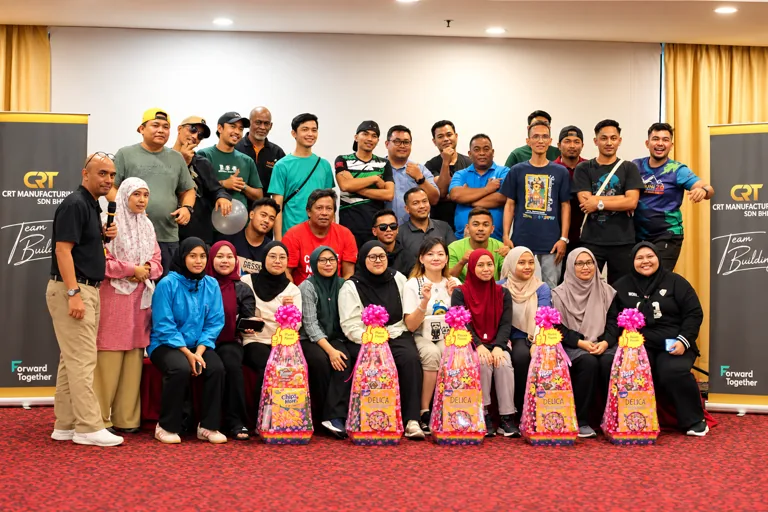
Tell us about your team, participant profile, approximate group size, preferred location and duration, and the objectives or challenges you want the programme to address.