
Direction
Clarify where the team needs to go.
Corporate programme
Leadership responsibility extends beyond personal performance.
Managers need to set direction, make decisions, communicate priorities and create the conditions for other people to perform.
This programme develops practical leadership capability around the responsibilities participants actually need to handle.

Programme overview
The move from individual contributor to leader changes the nature of the work. Results increasingly depend on direction, communication, coordination and decisions made through others.
Leaders need to clarify priorities, delegate authority, influence stakeholders, support capability and maintain accountability.
The programme connects these responsibilities with realistic management situations rather than motivational messages alone.
Final programme details, duration and activities will be confirmed in the proposal.
Why it matters
Strong technical performance does not automatically prepare someone to lead people, make wider decisions or align work across functions.
Teams need to understand priorities and how their work contributes.
Leaders must weigh information, constraints and consequences when making decisions.
Effective delegation creates clarity about outcomes, authority, support and follow-up.
Leaders need to review progress and address gaps without taking back every task.
Learning outcomes
Programme content
Final emphasis may be adapted according to participant responsibilities and organisational needs.
Understand how responsibility changes when results depend on other people.
Clarify direction, decisions, relationships and accountability.
Communicate priorities and expectations across levels and functions.
Connect organisational direction with team action.
Examine information, options, consequences and judgement.
Define outcomes, authority, timing, support and follow-up.
Work with stakeholders when formal authority is limited.
Create clear commitments and review progress constructively.
Respond to changing priorities without losing direction or standards.
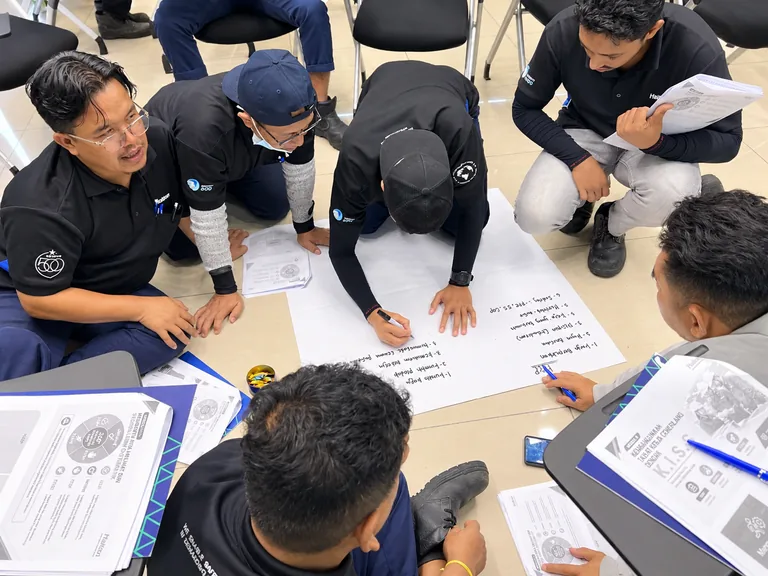
Workplace application
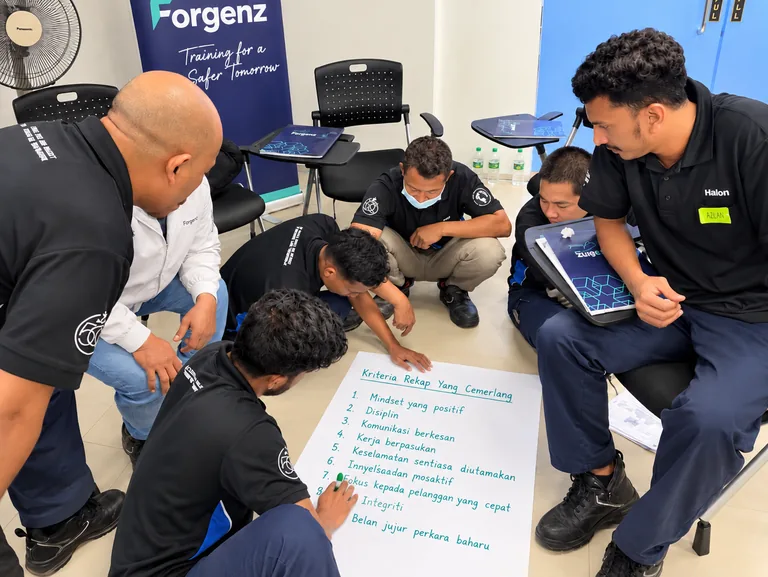
Learning approach
Participants examine situations, practise conversations and plan how they will apply the learning to their responsibilities.
Programme planning
Leadership needs differ by experience, management level and responsibility.
Focus on role transition, confidence, communication and delegation.
Emphasise decision-making, cross-functional influence and accountability.
Support alignment, strategic communication and leading change.
YOUR NEEDS SHAPE THE PROGRAMME.
Request a proposal →Delivery
The programme can combine facilitated discussion, cases, role-play, decision exercises and action planning.
FAQ
It develops practical skills in direction, communication, decision-making, delegation, influence and accountability.
Yes. The scope can focus on role transition and foundational leadership responsibilities.
No. Leadership Training is broader; Supervisory Skills focuses on daily first-line supervision.
Yes. Delegation can include outcomes, authority, timing, support and follow-up.
Relevant people-leadership responsibilities can be included without replacing specialist HR programmes.
Yes. Communication of direction, priorities and expectations is a core area.
Yes, suitable scenarios can be adapted without exposing confidential information.
No. The emphasis is practical workplace leadership capability.
Yes. The scope can shift toward alignment, influence, decisions and change.
Duration depends on participant level, scope and practical activities.
Related programmes
Explore a related dedicated programme.
Explore →RelatedExplore a related dedicated programme.
Explore →RelatedExplore a related dedicated programme.
Explore →RelatedExplore a related dedicated programme.
Explore →Eligible employers can apply to use their HRD Corp levy for applicable programmes, subject to HRD Corp requirements.