
Identify
What chemical is involved?
Corporate programme
Workplace chemicals can create very different hazards depending on what is being used, how it is handled and where the task takes place.
Employees therefore need more than a general instruction to be careful. They need to understand the hazards, information and controls that apply when working conditions change.
Forgenz Chemical Handling Training helps participants connect chemical information with practical workplace handling decisions.
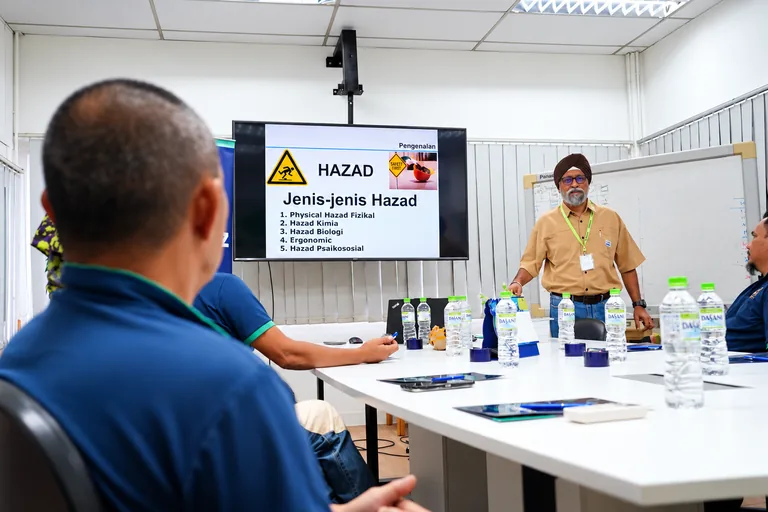
Programme overview
Chemical handling can take place during receiving, storage, transfer, production, maintenance, cleaning, laboratory work and waste handling. The level of risk depends on the chemical, exposure route, quantity, task, environment and controls available.
Problems can occur when employees use unfamiliar substances, transfer chemicals into unsuitable containers, miss damaged labels, select unsuitable PPE or continue a task after conditions change.
The objective is not to turn participants into chemists. It is to help employees make safer decisions before, during and after handling workplace chemicals.
Final programme details, duration and activities will be confirmed in the proposal.
Why it matters
A chemical does not become harmless because employees use it every day. Routine familiarity can reduce caution, especially when information is missing or conditions change.
Employees need to recognise what exposure may occur and where reliable information can be found.
Labels, SDS information, work procedures and suitable PPE should support the same handling decision.
Leaks, damaged containers, missing labels or unusual reactions require people to stop and reassess.
Supervisors need enough awareness to recognise shortcuts and reinforce safer work practices.
Learning outcomes
Programme content
Final emphasis may be adapted according to participant responsibilities and organisational needs.
Connect chemical hazards with the tasks, exposure routes and controls found in everyday work.
Cover product identity, hazard information, transferred chemicals and missing or damaged labels.
Use SDS information to support decisions about hazards, handling, storage, PPE, accidental release and first response.
Consider inhalation, skin contact, eye contact and ingestion when selecting controls.
Review container condition, transfer, decanting, suitable equipment, contamination prevention and organised work areas.
Discuss compatibility, segregation, identification, container integrity, housekeeping and access control where relevant.
Review gloves, eye protection, protective clothing and respiratory protection where relevant to the actual chemical and task.
Understand why the response depends on the chemical, quantity, hazard, training, equipment and emergency procedures.
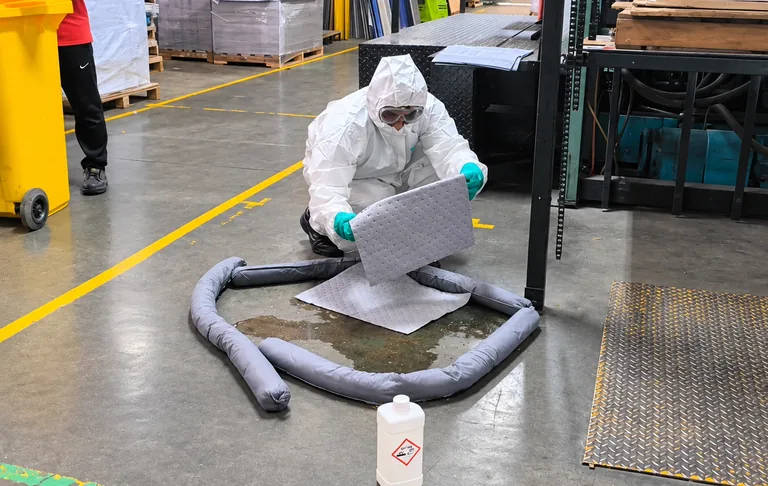
Workplace application
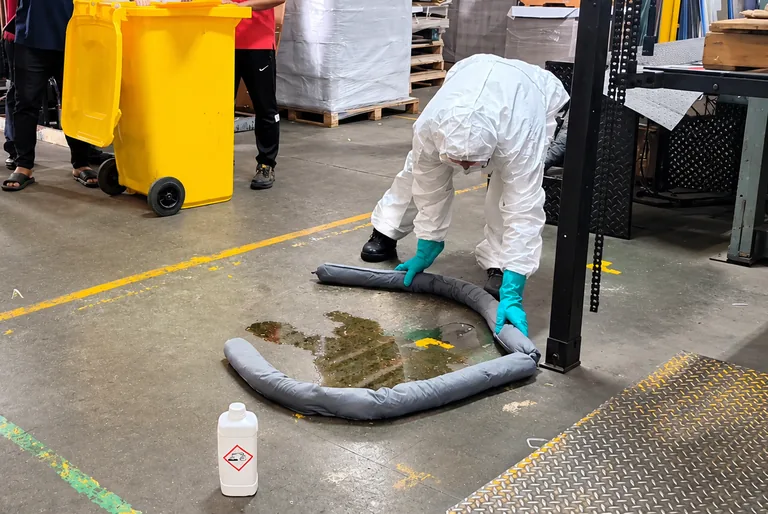
Learning approach
Activities help participants interpret information and decide what a safer response looks like in realistic workplace situations.
Programme planning
The programme should reflect the chemicals, roles and work activities participants actually encounter.
Focus on recognition, routine handling, labels, SDS information and required controls.
Include observation, monitoring, changed conditions and appropriate escalation.
Use relevant storage, transfer, task and emergency responsibilities without exposing sensitive information.
YOUR NEEDS SHAPE THE PROGRAMME.
Request a proposal →Delivery
Delivery can combine explanation, label and SDS exercises, workplace scenarios and demonstrations according to the agreed scope.
FAQ
It is workplace learning that helps employees recognise chemical hazards, use labels and SDS information, understand controls and respond more appropriately during normal or abnormal conditions.
No. It can be relevant to laboratories, warehouses, facilities, cleaning operations, maintenance teams and other workplaces where chemicals are handled.
Yes. Participants can practise finding useful information without being expected to memorise every SDS section.
Yes. Product identity, hazard information, transferred chemicals and missing or damaged labels may be covered.
Yes, where relevant. PPE selection must reflect the actual chemical, exposure and workplace requirement.
Yes, suitable labels or SDS information can be discussed when provided safely and without exposing confidential information.
It can include spill-awareness and response decisions. It does not assume every spill should be handled by the nearest employee.
No. Chemical handling focuses on chemical information and safer work practices, while HIRARC is a broader hazard-identification and risk-control process.
No. The programme does not replace CHRA, required risk assessments, specialist advice or organisational procedures.
Yes. Supervisor content can include observation, unsafe shortcuts, employee understanding and escalation.
Duration depends on the chemicals, participant roles, activities and agreed learning outcomes.
Eligible employers can apply to use their HRD Corp levy for applicable programmes, subject to HRD Corp requirements.