
Identify Priorities More Clearly
Distinguish between work that is important, urgent, routine or lower priority.
Corporate programme
Managing time effectively is not simply about working faster.
It requires employees to understand priorities, plan their workload, manage interruptions and make better decisions about how their available time and attention are used.
This programme helps participants develop practical approaches to managing competing demands, improving focus and completing important work more consistently.
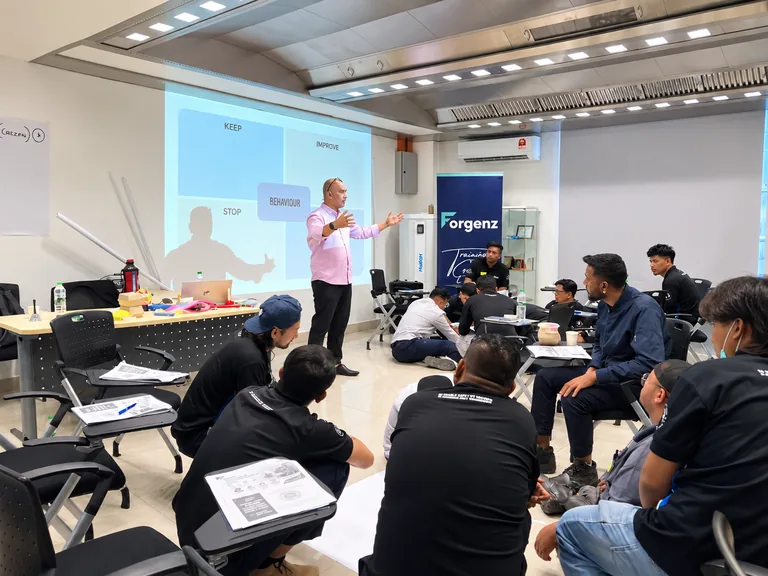
Programme overview
Many employees are busy throughout the day but still struggle to complete the work that matters most.
Urgent requests, meetings, interruptions, changing priorities and unclear planning can make it difficult to maintain focus.
Time Management Training helps participants examine how they currently manage their workload and develop more structured approaches to planning, prioritising and following through on responsibilities.
The programme focuses on practical workplace habits rather than unrealistic productivity techniques.
The objective is to help participants manage their available time more deliberately, make clearer decisions about priorities and reduce avoidable pressure caused by poor planning or unclear commitments.
Why it matters
Employees often need to manage several responsibilities at the same time. The challenge is not always a lack of time.
Learning outcomes
Distinguish between work that is important, urgent, routine or lower priority.
Organise daily and weekly responsibilities with greater clarity.
Evaluate multiple demands and make more deliberate decisions about what should be addressed first.
Recognise common reasons for delaying tasks and use practical approaches to getting started.
Respond to unexpected requests and disruptions without losing control of important work.
Create better conditions for completing work that requires sustained concentration.
Recognise when workload exceeds available time and communicate priorities, constraints or deadlines more effectively.
Use practical systems to track responsibilities, deadlines and unfinished work.
Programme content
The final emphasis can be shaped around participant responsibilities, workload and common workplace challenges.
Recognising that effective time management involves managing priorities, attention and workload rather than controlling time itself.
Identifying habits, interruptions and working practices that may reduce effectiveness.
Using practical criteria to determine what requires attention and what may be delayed, rescheduled, delegated where appropriate or removed.
Understanding the difference between immediate demands and work that contributes to longer-term priorities.
Developing a clearer approach to organising workload and upcoming commitments.
Planning work across competing responsibilities and identifying potential problems before deadlines become critical.
Understanding why tasks are delayed and using practical approaches to reduce unnecessary avoidance.
Responding to calls, messages, meetings and unexpected requests without allowing the entire workday to become reactive.
Creating periods of focused work and reducing unnecessary switching between tasks.
Examining how meeting preparation, participation and follow-up affect workload.
Clarifying priorities, negotiating realistic timelines and avoiding commitments that cannot reasonably be delivered.
Using simple review practices to identify unfinished work, changing priorities and upcoming deadlines.
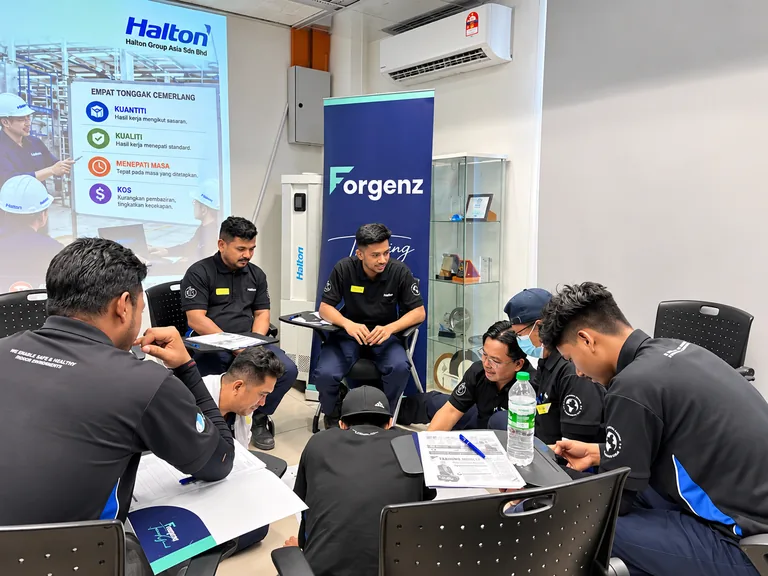
Practical framework
Being busy does not always mean that the most important work is being completed.
A practical approach can help participants make better decisions throughout the workday.
What needs to be done?
What deserves attention first?
When will the work be completed?
What time needs to remain focused?
How should unexpected requests be handled?
What has changed and what still requires attention?
Competing demands
In many workplaces, employees receive priorities from different people.
A manager may request one task while a customer, colleague or another department requires something else.
The programme can help participants consider:
Participants can also explore how to communicate when several priorities cannot realistically be completed at the same time.
Daily disruption
Interruptions are part of normal work. The issue is how they are managed.
The programme can help participants distinguish between interruptions that require immediate attention and those that can be scheduled, redirected or handled differently.
The aim is not to eliminate communication or accessibility, but to reduce unnecessary disruption to important work.
Workload visibility
Good time management does not mean accepting every request or assuming that every deadline can be met.
Sometimes the real issue is capacity. When workload exceeds the available time or resources, participants may need to:
The objective is to make workload constraints visible and manage commitments more deliberately rather than allowing unrealistic expectations to accumulate.
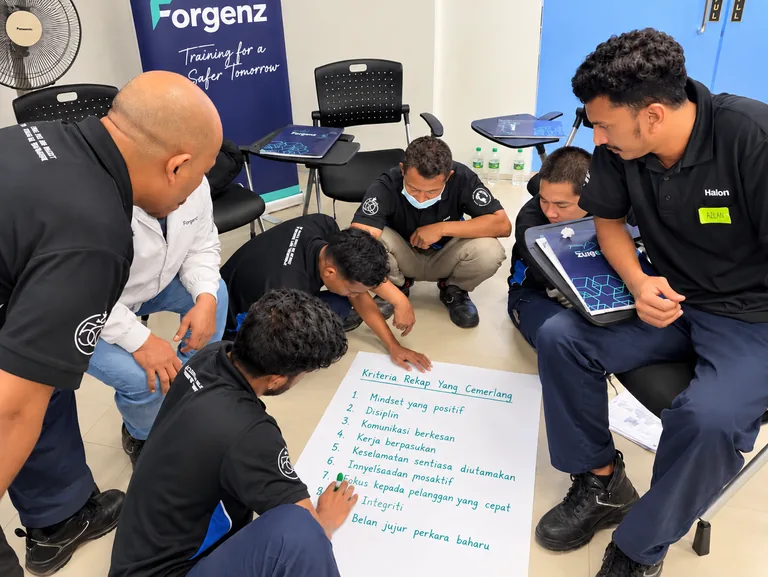
Getting started
Procrastination does not always come from poor motivation.
Employees may delay tasks because they are unclear, difficult, unpleasant, too large, low in immediate urgency, dependent on other people or competing with easier activities.
The programme can introduce practical approaches such as:
The emphasis is on understanding why work is being delayed and choosing a practical response rather than simply telling participants to “work harder.”
People responsibility
Managers and supervisors influence not only their own time, but also the workload and priorities of their teams.
This supports better workload management across the team rather than focusing only on individual productivity.
Learning approach
Where appropriate, participants can apply the approaches to realistic responsibilities from their own working environment.
The emphasis is on practical workplace application rather than productivity theory alone.
Programme planning
Time-management challenges differ between roles.
May focus more on recurring tasks, interruptions and workload planning.
May place greater emphasis on deadlines, dependencies and competing responsibilities.
May focus on balancing their own work with employee support, delegation and unexpected operational issues.
May place greater emphasis on team priorities, meetings, workload visibility and realistic commitments.
YOUR NEEDS SHAPE THE PROGRAMME.
Delivery
In-house corporate training or an agreed training arrangement.
Confirmed based on programme scope and intended learning outcomes.
English, Bahasa Malaysia or a suitable combination based on participant requirements.
Programme structure can be adjusted according to employee roles, workload and organisational context.
FAQ
Time Management Training helps employees make clearer decisions about priorities, workload, attention, commitments and available capacity. It focuses on practical workplace habits for planning, managing interruptions and following through on important work.
Yes. The programme can be adapted for employees, executives, administrative personnel, project teams, supervisors and managers according to their responsibilities and common workload challenges.
Yes. Participants can examine why tasks are delayed and use practical approaches such as clarifying the first step, breaking work into smaller actions and setting realistic milestones.
Yes. The programme can include practical exercises on urgency, importance, consequences of delay, dependencies, available resources and stakeholder expectations.
Not always. Time management can help participants make clearer decisions about priorities, planning, focus and commitments, but it cannot create additional capacity where workload genuinely exceeds the available time or resources. The programme can help participants recognise capacity constraints, communicate competing priorities and renegotiate timelines where appropriate.
No. Tools may support planning and organisation, but the programme focuses primarily on decision-making, priorities, attention, working habits and workload management.
Delegation can be included where relevant, particularly for managers, supervisors and team leaders who are responsible for assigning work to others. The focus is on identifying appropriate work to delegate, setting clearer expectations and maintaining suitable follow-up.
Yes. Managers can examine their own workload as well as how priorities, delegation, meetings and unrealistic commitments affect the wider team.
Yes. The programme can be structured around participant roles, common interruptions, workload patterns, deadlines and the organisation’s working environment.
Duration depends on the programme scope, participant group, practical activities and intended learning outcomes. It will be confirmed in the proposal.
Related programmes
Explore a related programme or discuss the most suitable training focus for your organisation.
Explore →RelatedExplore a related programme or discuss the most suitable training focus for your organisation.
Explore →RelatedExplore a related programme or discuss the most suitable training focus for your organisation.
Explore →RelatedExplore a related programme or discuss the most suitable training focus for your organisation.
Explore →RelatedExplore a related programme or discuss the most suitable training focus for your organisation.
Explore →RelatedExplore a related programme or discuss the most suitable training focus for your organisation.
Explore →Eligible employers can apply to use their HRD Corp levy for applicable programmes, subject to HRD Corp requirements.
Tell us about the participant group, workload challenges and productivity issues your organisation wants to address.
We can structure the programme around your workforce, working environment and intended outcomes.