
Identify Task
Choose a suitable task and intended outcome.
Corporate programme
Generative AI can support many workplace tasks, but useful results depend on context, review and human judgement.
Employees need to understand where AI may help, how to structure prompts, how to verify output and what information should not be entered.
This programme develops practical and responsible workplace AI capability.
Programme overview
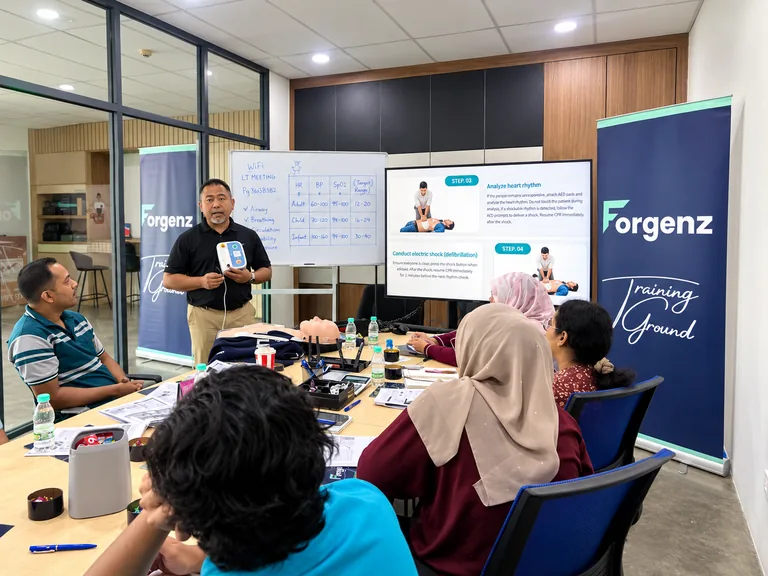
Prompting is only one part of effective AI use. Participants also need to select suitable tasks, provide context, review limitations, verify claims and apply organisational policy.
The programme can use realistic drafting, analysis, research or productivity scenarios while protecting confidential and personal information.
AI output is treated as a draft or input to judgement, not automatically accurate work.
Final programme details, duration and activities will be confirmed in the proposal.
Why it matters
Speed without review can create inaccurate, inappropriate or confidential output. Employees need a repeatable way to use AI with judgement.
Not every task is suitable for an AI tool.
Clear purpose, audience and constraints improve useful output.
AI may produce confident but incorrect information.
Organisational policy should guide what information may be entered into public systems.
Learning outcomes
Programme content
Final emphasis may be adapted according to participant responsibilities and organisational needs.
Explore common capabilities, limits and output patterns.
Identify suitable support for drafting, summarising, research, analysis or productivity.
Use task, context, audience, constraints and format.
Refine instructions, compare outputs and improve usefulness.
Check facts, sources, assumptions, tone and calculations.
Protect sensitive, personal and organisational information.
Maintain human judgement, accountability and policy awareness.
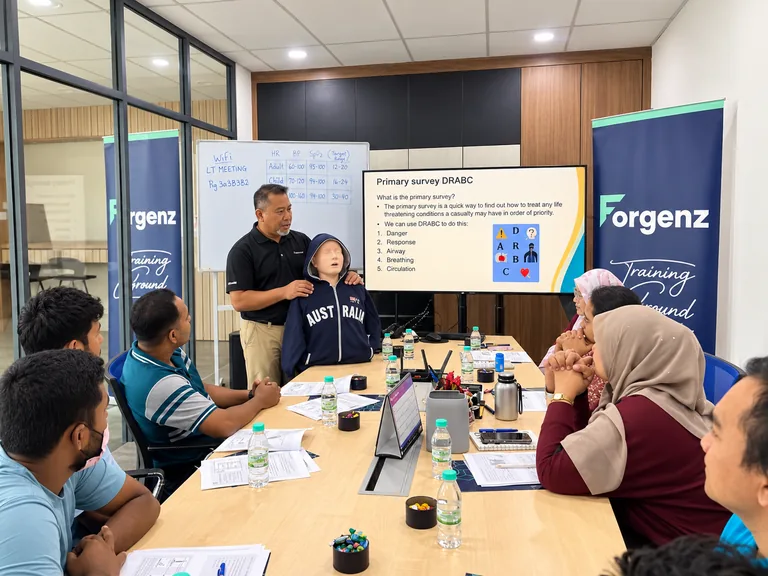
Plan how suitable tasks may be supported within role boundaries.
Workplace application
Learning approach
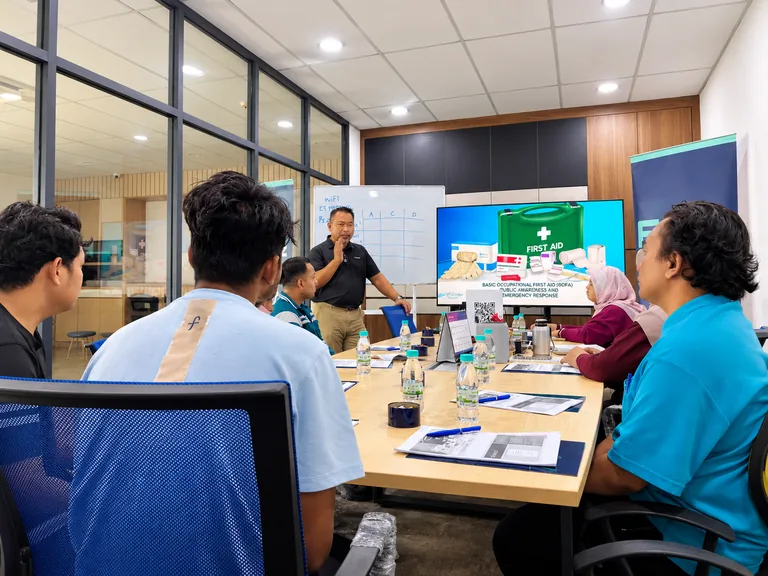
Participants use realistic workplace tasks to prompt, compare, verify and improve output responsibly.
Programme planning
The programme should reflect approved tools, organisational policy, participant roles and suitable use cases.
Build foundations in use-case selection, prompting, verification and confidentiality.
Include oversight, decision support, accountability and team guidance.
Use role-relevant examples while keeping the programme's primary focus on broad workplace AI capability.
YOUR NEEDS SHAPE THE PROGRAMME.
Request a proposal →Delivery
Delivery can combine demonstrations, guided practice, verification exercises and role-based application planning.
FAQ
It develops practical capability in use-case selection, prompting, review, verification, confidentiality and responsible application.
No. The programme can begin with foundations and adapt to current experience.
No. It also covers task selection, iteration, verification, confidentiality and human judgement.
Yes, relevant examples may be included, while the primary programme remains broad workplace AI capability.
Only according to organisational policy and approved systems. Unapproved sensitive information should not be entered into public AI tools.
Not automatically. Output should be reviewed and independently verified where accuracy matters.
Yes. Manager content can include oversight, accountability and team guidance.
Duration depends on participant level, tools and practical exercises.
Eligible employers can apply to use their HRD Corp levy for applicable programmes, subject to HRD Corp requirements.